Sources Cited
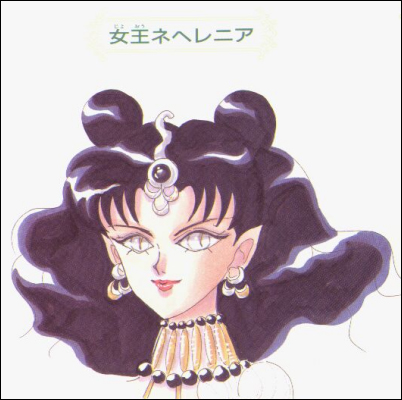
[1] Takeuchi, Naoko. Pretty Soldier Sailormoon: Materials Collection. Tokyo: Kodansha, 1999, p. 70. Image.
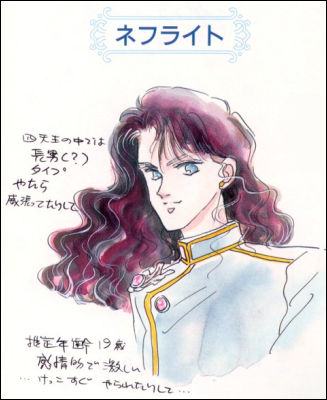
[2] Takeuchi, Naoko. Pretty Soldier Sailormoon: Materials Collection. Tokyo: Kodansha, 1999, p. 20. Image.
[3] Department of Geosystem Sciences. (Web page);
http://www.geo.chs.nihon-u.ac.jp/tchiba/volcano/kobetsu/id-358.htm (Accessed 22 September 2001).
[4] Endo, Akihiro. “Question about ‘Amazones.’” E-mail to Ian Andreas Miller. 5 January 2001.
[5] Jannet. JANNET Asteroid Page (2400s). (Web page);
http://www.aerith.net/JANNET/asteroid.per100/02400.html (Accessed 22 September 2001).
[6] I say that this is the most common spelling because my resources more often than not use it:
Anglo-Saxon. Nehalennia. (Web page);
http://www.anglo-saxon.demon.co.uk/goddesses/nehalennia/ (Accessed 22 September 2001).
Green, Miranda. Celtic Goddesses. London: British Museum Publications Ltd., 1995, pp. 176-180.
Davidson, Hilda Ellis. The Lost Beliefs of Northern Europe. London: Routledge, 1993, p.49.
[7] Walker, Barbara G. The Woman’s Encyclopedia of Myths and Secrets. San Francisco: Harper San Francisco, 1983, 720.
Nehellenia
"Nether Moon," a variant of the Goddess Hel, or Holle, after whom Holland was named. Altars and artifacts dedicated to her were found in Holland after a great storm in 1646 washed away the soil that had buried them.
[8], [9] Glover, Alex. Translation of the Pretty Soldier Sailormoon: Materials Collection: Page 70. (Viewed 22 September 2001).
Queen Nehalennia’s mirror. Placed in the room of Queen Nehalennia of the world of the new moon, the Dead Moon, and in the room of the leader of the Dead Moon Circus, Zirconia. They look in on each other’s worlds, and possibly see the location of Elysion and Helios, or reflect Sailor Moon and the others.
[10] Walker, Barbara G. The Woman’s Encyclopedia of Myths and Secrets. San Francisco: Harper San Francisco, 1983, 720.
Nehellenia
"Nether Moon," a variant of the Goddess Hel, or Holle, after whom Holland was named.
[11] Adkins, Lesley and Adkins, Roy A. Handbook to Life in Ancient Rome. London: Oxford University Press. "Gods and Goddesses," p. 267.
Nehalennia
A Celtic goddess of seafarers, fertility and abundance. She is known at two coastal shrines at Domburg and Colijnsplaat in the Netherlands. She is frequently portrayed with symbols of sea travel, such as a steering oar, as well as symbols of abundance. Another frequent accompanying symbol is a dog, usually portrayed in a benign protective pose. The variety of symbolism suggests that the goddess presided over wide issues such as healing, death and rebirth, and not just travel at sea.
[12] Green, Miranda. Celtic Goddesses. London: British Museum Publications Ltd., 1995, pp. 176-180.
A third possible link between dogs and mother-goddesses was an infernal one: the goddesses were associated with death as well as life, and the connection between dogs and chthonic forces is perhaps indicated by the presence of dogs in deep pits, as occurred at the Iron Age hillfort in Danebur or at the Romano-British temple at Muntham Court. The original link between dogs and death may have arise from their behaviour as hunters and scavengers but, if their association with the mother-goddesses was chthonic, these Romano-Celtic animals certainly did not represent the horrific savagery of Virgil’s hell-house, Cerberus, or of the canine hunters of human souls which are described in tales of the Welsh Otherworld, Annwn.
[13] Davidson, Hilda Ellis. The Lost Beliefs of Northern Europe. London: Routledge, 1993, p.49.
[14] Takeuchi, Naoko. Bish jo Senshi S
 r
r M
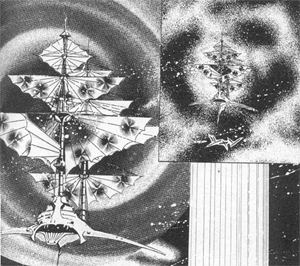
M n: Volume Fifteen. Tokyo: Kodansha, 1996, 47. Image.
[15] Anglo-Saxon. Votive Altars to Nehalennia. (Web page);
http://www.anglo-saxon.demon.co.uk/goddesses/nehalennia/altars.html (Accessed 22 September 2001).
[Nehalennia] also appears, however, with baskets of fruit, horns of plenty, loaves (some very like the products of local bakeries in recent times) and with a small dog sitting beside her. Such attributes indicate that she was a fertility goddess, who may also have possessed powers of healing and been associated with the realm of the dead.