|
“Kou?” Rebuttal
This section features a rebuttal to the “Kou?” part of the “Common Mistakes” page of The Three Lights Backstage Web site. Those who want to know more about the names of the Three Lights should look in the appropriate section of my Names, Puns, and Fallacies article.
|

Kou is the Three Lights LAST name.
|
That depends on what you mean by “last name.” That phrase could refer to their personal name or their surname. Usagi writes her full name in Japanese as   , and her “last name” in this case is really her personal name because it comes after her surname. In “Usagi Tsukino,” the “Tsukino” is her “last name” in this case because it comes after the “Usagi.” I blame most of the “Kou” confusion on people’s misunderstanding of the phrases “last name” and “first name.” Terms such as “personal name” and “surname” may sound pedantic, but they are more specific than the ambiguous phrases “last name” and “first name.” , and her “last name” in this case is really her personal name because it comes after her surname. In “Usagi Tsukino,” the “Tsukino” is her “last name” in this case because it comes after the “Usagi.” I blame most of the “Kou” confusion on people’s misunderstanding of the phrases “last name” and “first name.” Terms such as “personal name” and “surname” may sound pedantic, but they are more specific than the ambiguous phrases “last name” and “first name.”
|
People often think it is the first due to the common sense that in Japan, last name comes first.
|
It would be more accurate to say that, when Japanese names are written in the Japanese script, the written characters (kanji or kana) that represent the surnames come before the written characters that represent the personal names.
|
However, for idols, if you look around in japanese magazines (such as Newtype ^^;), you may discover that in every idol article or announcement or whatever, first name comes first and last name comes last. Don't ask me why, but it is true.
|
That is completely untrue. If the person has a Japanese name, and that Japanese name is written in the Japanese script, the surname will appear before the personal name. That is the rule for writing Japanese names in the Japanese script. (What is so darn difficult to understand about that simple concept?) That rule even applies to idols.
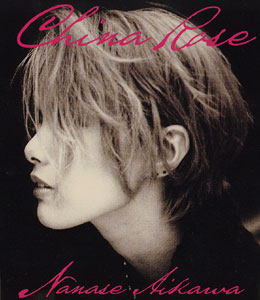
There is a certain famous Japanese singer who writes her name in the Japanese script as   . The Aikawa is her surname or family name. The Nanase is her personal name or given name. When her full name is written in Roman letters, it can be either “Nanase Aikawa” or “Aikawa Nanase.” However, her name would never correctly be written as in the Japanese script! . The Aikawa is her surname or family name. The Nanase is her personal name or given name. When her full name is written in Roman letters, it can be either “Nanase Aikawa” or “Aikawa Nanase.” However, her name would never correctly be written as in the Japanese script!
Usagi writes her full name in Japanese as . The two kanji represent her surname, Tsukino, and the hiragana characters represent her personal name, Usagi. Her name would never correctly be written as . When her full name appears in Roman letters, it can be “Tsukino Usagi” or “Usagi Tsukino.”
|
On the other hand, wouldn't it sound real strange if they were all named Kou? A little loss of originality, ne?
|
Would it not also sound strange if they all had the same surname and they were not related — a little loss of originality, huh?
|
Eolo also pointed out to me that they are foreigners, therefore not from Japan, because they have the furigana (the little letters on top of the kanji to know how to read it) on top of the kanji in their names as katakana (the japanese alphabet used to write foreign words),
|
The furigana over those names are not letters. They are kana characters. Specifically, they are katakana characters. Katakana is not the name of an alphabet. Katakana is a syllabary because each symbol represents a syllable. Furigana characters appear above kanji to show the intended readings of those kanji.
Katakana characters are not used exclusively to approximate non-Japanese names. If you say that katakana characters represent only non-Japanese terms, it would not make sense to say elsewhere that Rei’s name means spirit in Japanese, since her name is written in katakana characters ( ). ).
There is a character in the Sailor V manga named Toshio Wakagi who writes his personal name in katakana characters ( ). There is no doubt that his name is Japanese. There is a character in the Bish ). There is no doubt that his name is Japanese. There is a character in the Bish jo Senshi S jo Senshi S r r M M n anime named Yumemi Yumeno who writes her personal name in katakana characters ( n anime named Yumemi Yumeno who writes her personal name in katakana characters ( ). There is no doubt that her name is Japanese. Rei writes her name in katakana characters, but nobody is doubting that her name is Japanese. So the use of katakana characters does not necessarily indicate that a name is non-Japanese. One may wish to write Japanese words in katakana characters for emphasis. ). There is no doubt that her name is Japanese. Rei writes her name in katakana characters, but nobody is doubting that her name is Japanese. So the use of katakana characters does not necessarily indicate that a name is non-Japanese. One may wish to write Japanese words in katakana characters for emphasis.
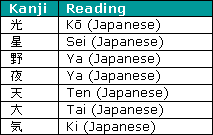
The Three Lights may not really be from Japan, but their names are Japanese:   (Seiya’s full name), (Seiya’s full name),  (Yaten’s full name), (Yaten’s full name),  (Taiki’s full name). The kanji is read as k only in Japanese. The kanji (Taiki’s full name). The kanji is read as k only in Japanese. The kanji  is read as sei only in Japanese. The kanji is read as sei only in Japanese. The kanji  is read as tai only in Japanese. All of the kanji in their names are supposed to have Japanese readings. Here is a chart of the kanji and their readings: is read as tai only in Japanese. All of the kanji in their names are supposed to have Japanese readings. Here is a chart of the kanji and their readings:
|
Therefore, if they are not from Japan, their name is read just the same way as in all countries... first name comes first, last name comes last. An example of this is Li Shaolan from Card Captor Sakura (CLAMP). His first name is Li, and he is always introduced as Li Shaolan (even in school), because he is from Hong-Kong. He also has the furigana in the top of the kanji in his name written in katakana.
|
It is amazing how many erroneous statements someone can make in a single paragraph.
The “surname first, personal name last in the original script” method is not only practiced in Japan. The Chinese and Koreans also do it. So the “same way as in all countries... first name comes first, last name comes last” statement is false.
That Card Captor Sakura explanation is inaccurate. Xiaolang uses the kanji   to write his full name. The kanji represents his surname: Li. Meiling even shares the same surname. The katakana characters that serve as furigana characters ( to write his full name. The kanji represents his surname: Li. Meiling even shares the same surname. The katakana characters that serve as furigana characters (   Ri Shaoran) over the kanji approximate the Chinese pronunciations of those kanji. So the combination Ri Shaoran approximates the name Li Xiaolang. Ri Shaoran) over the kanji approximate the Chinese pronunciations of those kanji. So the combination Ri Shaoran approximates the name Li Xiaolang.
According to the information that I provided above, it seems that K is the Three Lights' personal name: is the Three Lights' personal name:
Premise 1: When Japanese names are written in the Japanese script, the surname appears before the personal names.
Premise 2: The names , , and are all Japanese names and they are written in the Japanese script.
Premise 3: The (K) part of the three names come after the other parts.
Conclusion: The (K) part of the three names are their personal names.
There does not seem to be any reason to think that the names do not follow the usual rules for reading Japanese names in the Japanese script.
© 2002-2008 Ian Andreas Miller. All rights reserved. Those statements refer to all of the original content on these Web pages. All of the other works that are mentioned on these pages are the properties of their authors.
|