Sources Cited
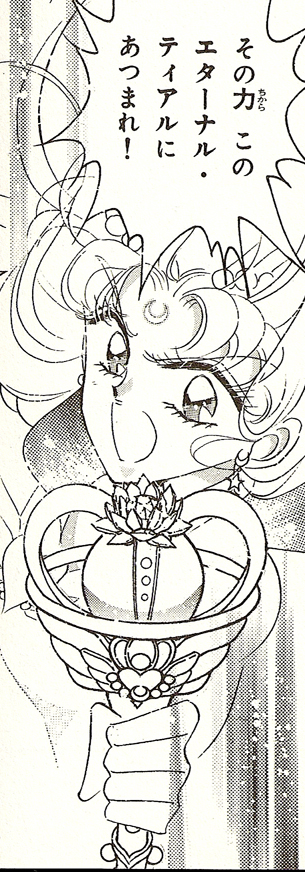
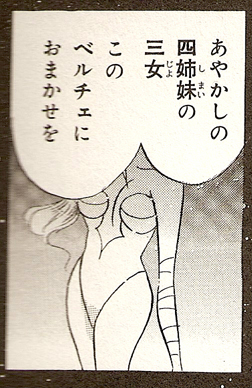
[1] Takeuchi, Naoko.
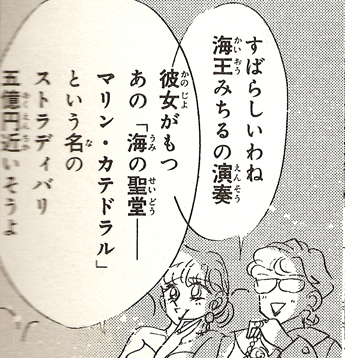
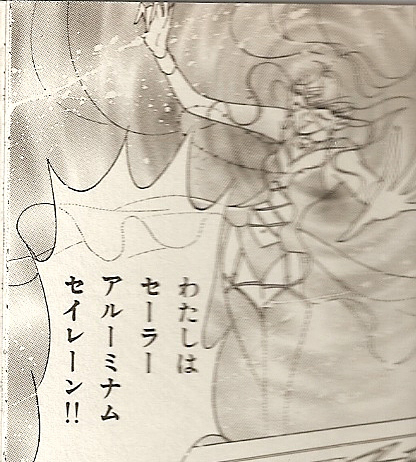
Bishōjo Senshi Sērā Mūn, Pretty Guardian Sailormoon Volume 10. Tokyo: Kodansha, 2004.
194.
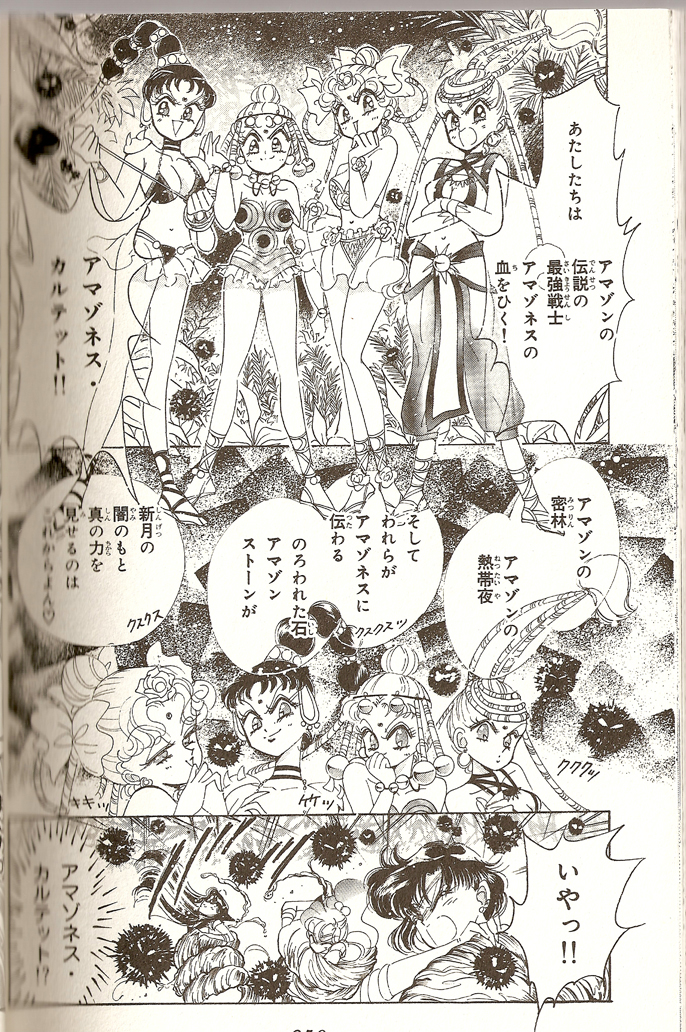
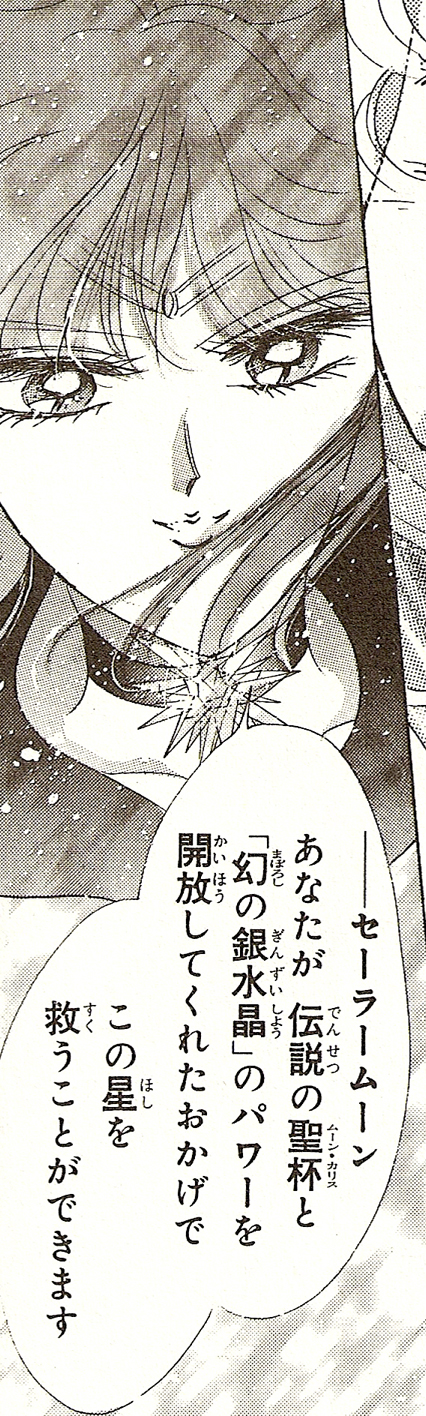
[4] Takeuchi, Naoko.
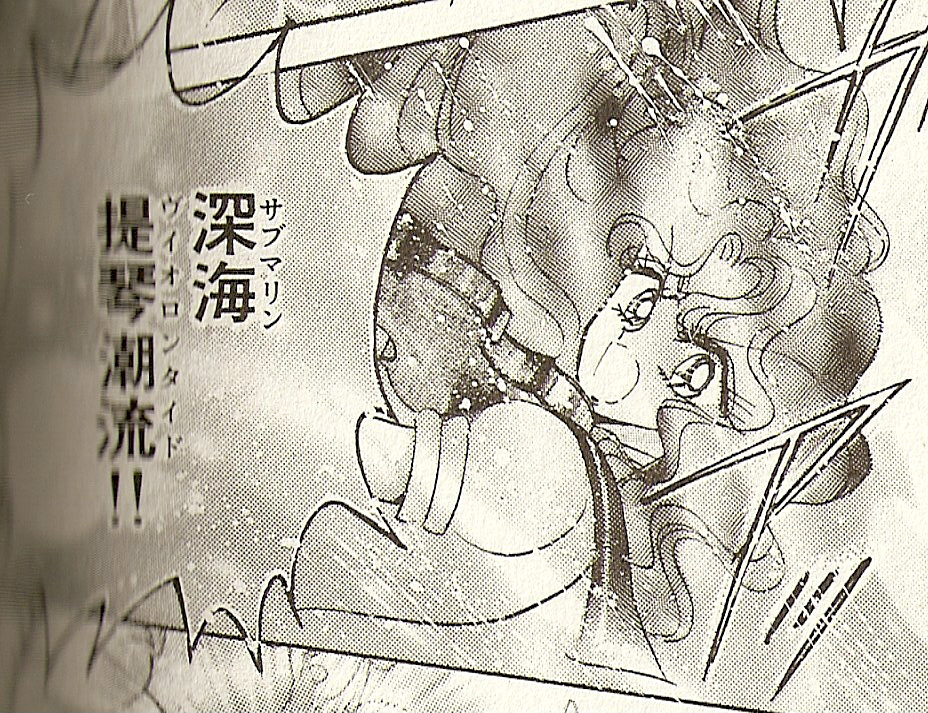
Bishōjo Senshi Sērā Mūn, Pretty Guardian Sailormoon Volume 9. Tokyo: Kodansha, 2004.
256.
“English plural.” Wikipedia. 20 June 2007. <http://en.wikipedia.org...>
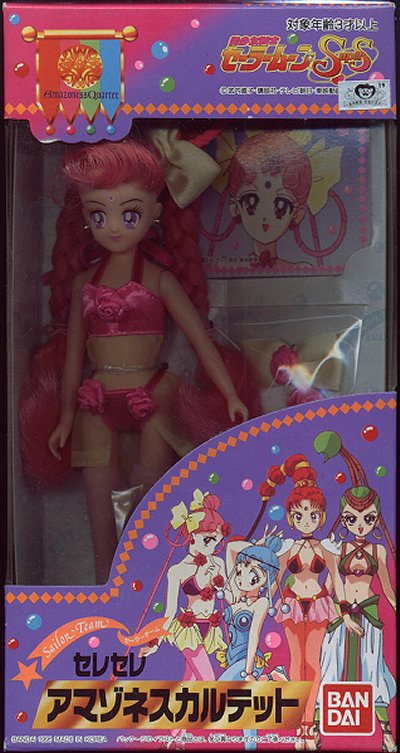
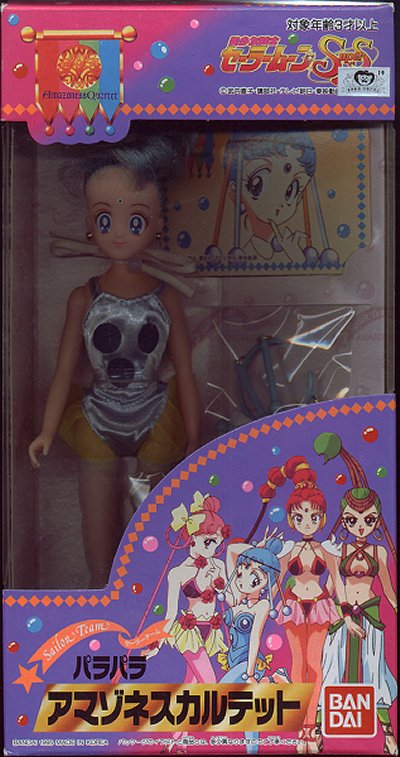
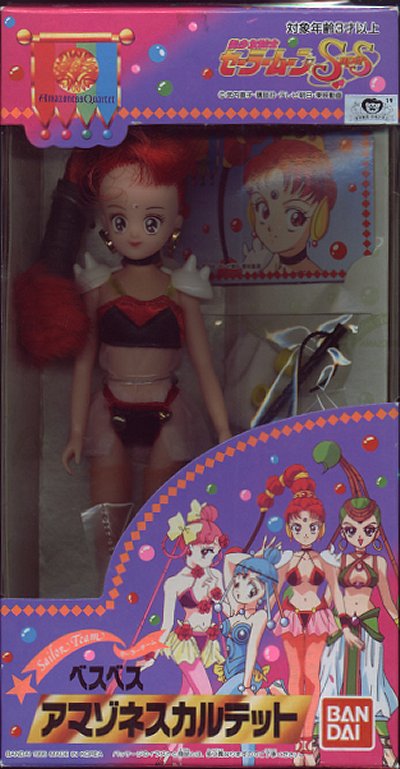
The Amazones in Amazones Quartet is a plural-form word used attributively (as an adjective) to modify Quartet. Other names that follow the same procedure are Alumni Association, Participants Manual, Bakers Square, Authors Guild, Department of Veterans Affairs, and Investors Trust. There are also the phrases careers advisor, a languages expert. Even in the anime, the Lemures refer to themselves as the レムレス軍団, the Lemures Corps, where Lemures is technically plural!
A noun used to describe another, and standing in the same part of the sentence with the noun described, is called an Appositive, and is said to be in apposition. So, the Amazones in Amazones Quartet may be in apposition to Quartet. This is a complement, not a redundancy.
[8] Takeuchi, Naoko.
Bishōjo Senshi Sērā Mūn, Pretty Guardian Sailormoon Volume 9. Tokyo: Kodansha, 2004.
256.
The girls say that they are descended from (血をひく) from the アマゾネス. Regardless of the Roman-letter spelling, アマゾネス refers to the Amazons from classical mythology, or to women who may be called Amazons (like the mythological ones).
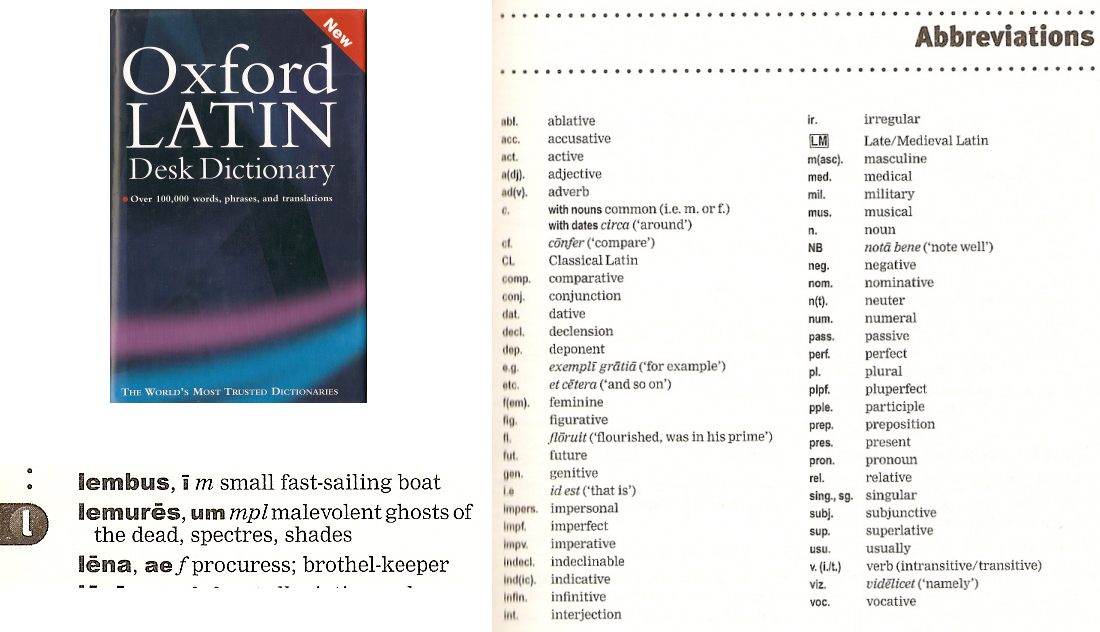
“
Lemurēs.”
Oxford Latin Desk Dictionary. 2nd ed. 2005.
Words like Lemurēs that do not have singular forms are called pluralia tantum. Characters in the manga usually use Lemurēs, but characters in the anime very often refer to one of the Lemurēs as a Lemurēs.
The singular use of a gairago for a morphologically plural word makes Amazones in Amazones Quartet either singular or plural.
But compare that to the “Three Rights,” “Kunzait,” “Jadeito,” “Elishon,” “Nehelinea,” “Sailor Satan” that are also found on non-canonical sources! The Principle of Etymic Orthography and the Principle of Gairaigo Concurrence are used when rejecting those spellings. So, why not also for Amazoness?
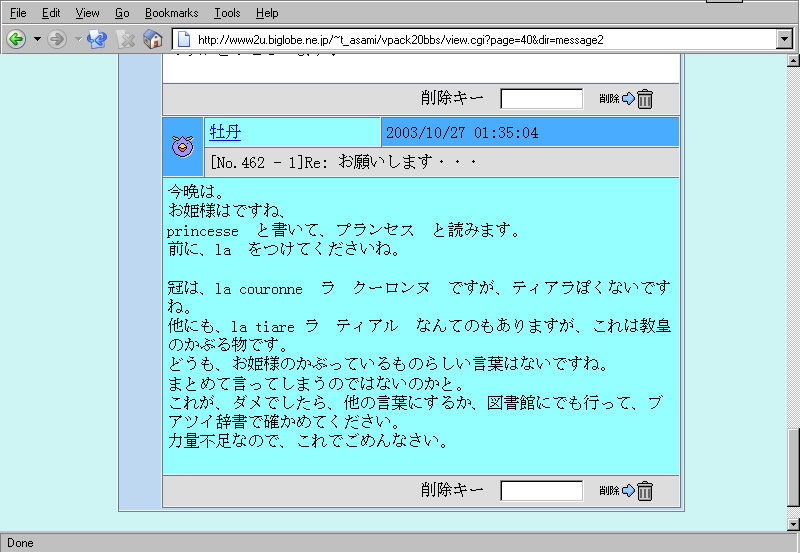
In linguistics, productivity refers to the readiness of prefixes, suffixes, and other morphological patterns used in forming new words based on the analogies of already-existing words presently used. The suffix -ed, for instance, is quite productive in English: spammed, e-mailed, on the analogy of already-existing words such as loved, killed. What is meant by “The suffix -ess is not productive with a feminine word” is that there is literally no other well-established English word or wasei-eigo that was formed by adding the suffix -ess to a word that refers to only female people (as opposed to male ones). We simply do not see words such as girless or womaness. Amazoness does not have an analogously morphological predecessor. The suffix is, however, productive with gender-neutral words such as lion: lioness.
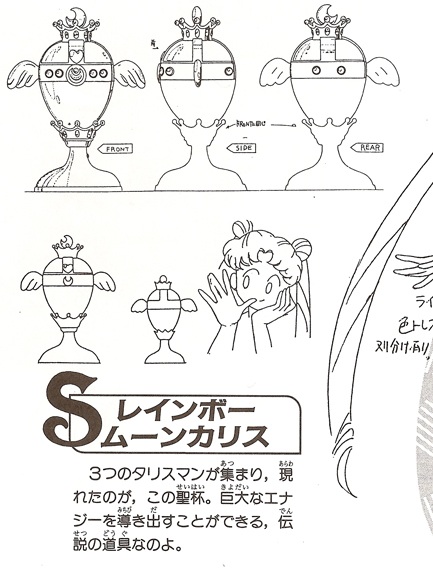
Kodansha.
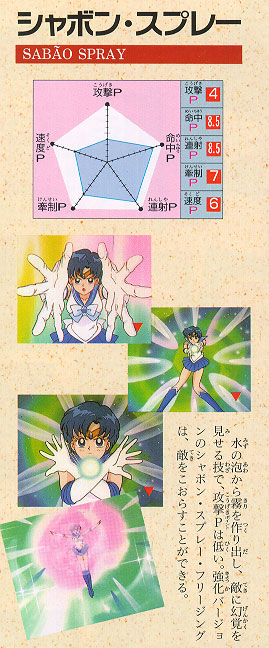
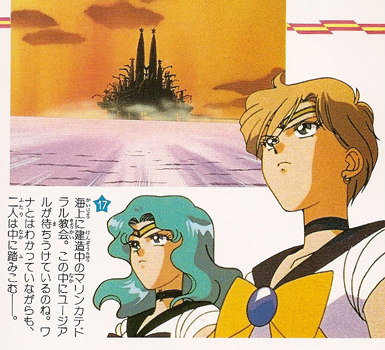
Bishōjo Senshi Sērā Mūn, Pretty Soldier Sailormoon S: Nakayoshi Anime Album II. Tokyo: Kodansha, 1995.
95.
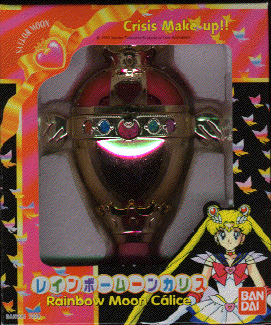
“
カリス.”
Yahoo! Japanの辞書 サービス. 21 June 2007. <
http://dic.yahoo.co.jp...>
This entry misspells the Portuguese word, but otherwise everything is fine.
“カリス.” Wikipedia (Japanese). 21 June 2007. <http://ja.wikipedia.org...>
The Japanese language does not use the /v/ sound, so it uses /b/ as an approximation. ヴ (vu) and ブ (bu) may represent the same Japanese combination of sounds, but ヴ is often used to show that it is approximating a /v/ sound.
“ステーブル.” 地球人ネットワークを創るアルク:スペースアルク. 21 June 2007.
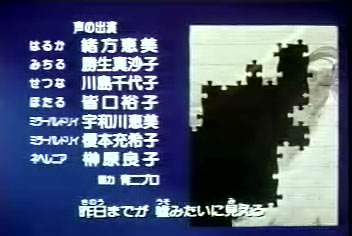
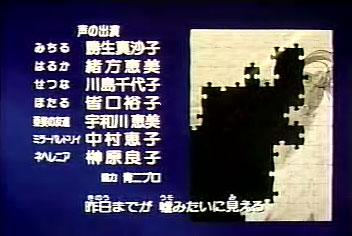
The credits for Bishōjo Senshi Sērā Mūn episodes 168 and 170 actually show ミラーパレドリイ. That also appears on one section of Toei’s Sailor Stars Web site. However, sources such as one of the pages of the Sailor Stars Music Collection CD and the Bishōjo Senshi Sērā Mūn Memorial Music Box set show ミラーパレドリー.
The site cited above is no longer there, but I did record what it said: